
A movement name can become a shortcut for an entire buying decision. The Cronos 36mm Explore PT5000 contains a PT5000; the Addiesdive 39mm Retro Mechanical Watch contains an NH35. That much is catalogue fact. The harder question is whether either movement changes your likely costs, habits or confidence enough to make the watch a poor fit.
In the linked community discussion, owners and prospective buyers raise concerns about winding feel, repairs and long-term reliability. These accounts are valuable as questions to investigate. They are not a controlled comparison of failure rates. A rough-feeling crown, a movement that needs regulation and a movement that has failed are three different reports. Treating them as interchangeable makes any movement sound more frightening than the evidence permits.
Start with what ownership would require
First, think about how you set a watch. A person who wears one automatic every day may rarely hand-wind it. Someone who rotates five watches may do so constantly. That difference makes winding feel more or less important, whatever a forum consensus says. If the movement is a concern, ask owners of the exact reference about crown operation over time, and distinguish a subjective feel from a confirmed fault.
Second, price the realistic remedy. Before purchase, check the seller’s warranty and return route, then ask a local repairer whether they would inspect or replace the movement and what that might cost. A movement can be technically serviceable but uneconomic to service in a low-cost watch. Conversely, a watch you value for its design may justify a repair that makes little sense on paper. You need the local answer, not a theoretical parts list.
Third, avoid letting the movement erase the rest of the watch. The Cronos is a compact three-hand watch; the Addiesdive is larger and uses a different design. Their cases, fit and appearance may settle the decision before the movement does. Check the catalogue measurements that exist, and notice where measurements are missing. An unknown lug-to-lug is a reason to seek a wrist photograph or measurement, rather than assume two watches of similar diameter wear alike.
It also helps to ask what kind of uncertainty you are trying to eliminate. No movement choice removes the possibility of a defective individual watch. A clear return window, an accessible seller and a prompt inspection on arrival can reduce the consequences of that uncertainty more directly than an argument over movement families. Check the watch you receive while a remedy is still available.
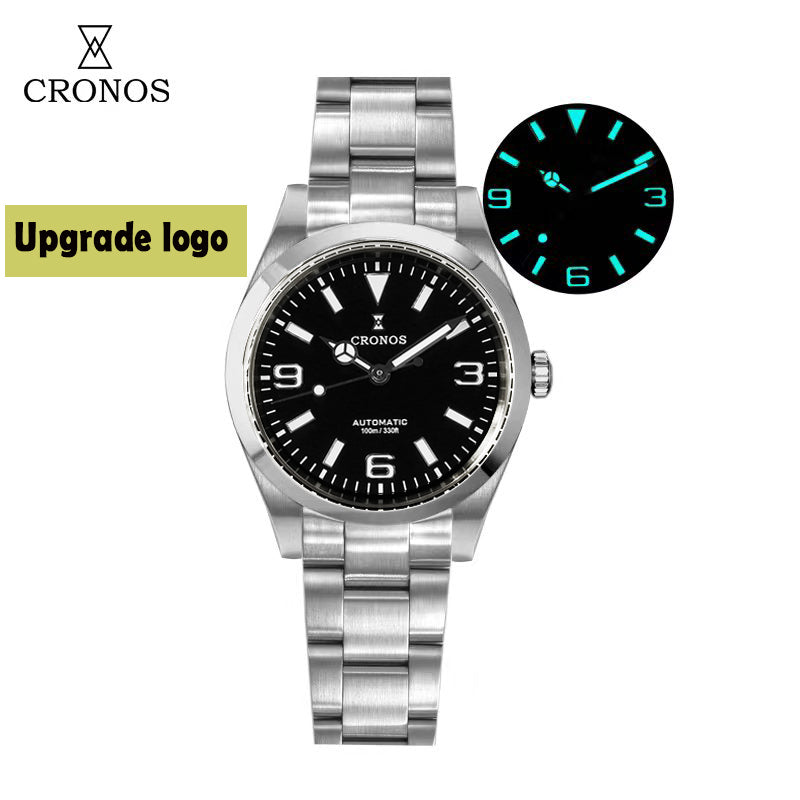
Cronos
36mm Explore PT5000
A compact PT5000 example for evaluating the trade-off.

Addiesdive
39mm Retro Mechanical Watch
An NH35 alternative with a different price and movement proposition.
A useful owner report would name the exact watch, how often it was worn and wound, the age of the watch, the symptom and what a repairer found. Without that context, ‘PT5000 problem’ can mean almost anything. The movement is a reason to ask better questions. It becomes a reason to walk away only when the answers conflict with your budget or tolerance for repair risk.